
The passage
Let me not to the marriage of true minds
Sonnet 116
Admit impediments. Love is not love
Which alters when it alteration finds
Or bends with the remover to remove.
O, no, it is an ever-fixed mark
That looks on tempests and is never shaken;
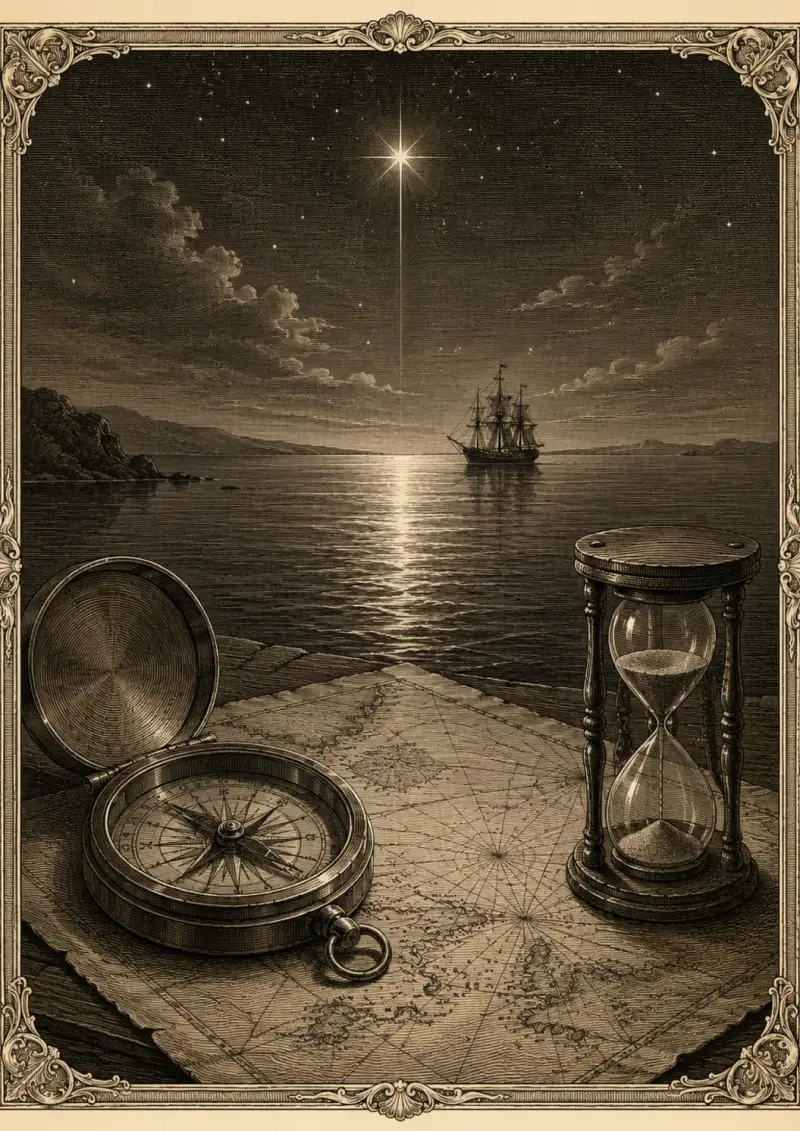
It is the star to every wand’ring bark,
Whose worth’s unknown, although his height be taken.
Love’s not Time’s fool, though rosy lips and cheeks
Within his bending sickle’s compass come;
Love alters not with his brief hours and weeks,
But bears it out even to the edge of doom.
If this be error, and upon me proved,
I never writ, nor no man ever loved.
In plain English
I will not accept that anything can stand in the way of a union between two faithful minds. Love that changes when the loved one changes, or that withdraws when the other withdraws, is not love. No: love is a fixed beacon that watches storms and is never moved. It is the star by which every wandering ship steers, a star whose altitude can be measured but whose value cannot. Love is not the plaything of Time, even though youth and beauty fall within the sweep of his curved blade. Love does not change with Time’s short hours and weeks, but lasts until Doomsday. If I am wrong, and it can be proved against me, then I never wrote anything, and no man ever loved.
Where it comes in the sequence
Shakespeare’s sonnets were published together in 1609. Sonnet 116 falls within the first and larger group, numbers 1 to 126, traditionally read as addressed to a beautiful young man. The Sonnets study guide explains that arrangement and its uncertainties.
Its neighbours are not serene. The sonnets around it deal with absence, neglect and unfaithfulness on both sides. The very next poem begins Accuse me thus: that I have scanted all
, and lists the speaker’s own failures of constancy. So this statement of unchanging love sits among poems about change. That does not make it insincere. It does suggest a position defended, not a truth taken for granted.
The poem itself names no person, no gender and no occasion. Unlike Sonnet 18, it has no “thee”. That impersonality is one reason it travels so easily to weddings.
Close reading
The form
This is a Shakespearean (English) sonnet: fourteen lines of iambic pentameter in three quatrains and a couplet, rhyming abab cdcd efef gg. Each quatrain here does a distinct job. The first says what love is not. The second says what it is. The third sets it against Time. The couplet stakes everything on the claim.
Quatrain one: a vow and two negatives
The opening echoes the marriage service, in which anyone who knows an impediment to the union is asked to declare it. The speaker answers that challenge before it is made: Let me not ... Admit impediments
. But the marriage is one of true minds
, not of bodies or legal persons. It is a union no church was offering to solemnise.
The sentence runs across the line ending (enjambment), and its first words resist the regular iambic beat: the voice leans on Let
and not
. The poem begins in the rhythm of urgent speech.
Then comes a definition by denial: Love is not love / Which alters when it alteration finds
. Shakespeare repeats a word in a changed form, alters
and alteration
, remover
and remove
, a device called polyptoton. The effect is to mimic a love that mirrors whatever its object does: you alter, so I alter. True love, on this account, does not respond in kind.
Quatrain two: the sea-mark and the star
O, no
is an exclamation, almost a protest, and it turns the poem from negative to positive. Love is an ever-fixed mark
, a sea-mark such as a beacon, which looks on tempests and is never shaken
. Then it is the star to every wand’ring bark
: the pole star, by which a lost ship finds its position.
Both images come from navigation, and both make love a fixed point of reference for something else that moves. The lover is the ship, not the star. Line 8 adds a precise thought. A navigator can take the star’s height
, measuring its altitude with an instrument, yet its worth’s unknown
. Love can be observed and used, and still not be fully valued. (his
here means “its”.)
Lines 6 and 8 each have an eleventh, unstressed syllable, a feminine ending: shaken
, taken
. There is a small irony in the line about never being shaken ending on a falling, unsteady beat.
Quatrain three: Time’s sickle
The third quatrain names the real enemy. Love’s not Time’s fool
: love is not Time’s jester or dupe.
The concession that follows is honest. rosy lips and cheeks
do come Within his bending sickle’s compass
. Beauty will be cut down. bending
describes the curved blade, and recalls the false love that bends
in line 4. compass
means range, and keeps the navigational vocabulary alive. The poem does not claim that the beloved will stay beautiful. It claims that love is not located in the lips and cheeks
.
Elsewhere in the sequence Time wins outright. In Sonnet 60, nothing stands but for his scythe to mow
. Here one thing stands. Time is reduced to brief hours and weeks
, while love bears it out even to the edge of doom
, that is, endures until the Last Judgement.
The couplet: a wager
The couplet changes register to the language of law: error
, proved
. Its logic is a dare. If the speaker is wrong, then he never writ
, and since we are reading what he wrote, the claim appears to be safe. It is a rhetorical flourish, not a proof. The second half, nor no man ever loved
, raises the stake by making this definition the test of all love. The double negative is emphatic, as often in Shakespeare’s English.
What it tells us about the sequence
Count the negatives: not
, not
, no
, never
, not
, not
, never
, nor no
. A poem celebrated as a positive definition of love says far more about what love is not. Even its positive images are defined by resistance. It can be read as triumphant faith. It can also be read as a speaker insisting, against the evidence of the poems around it, that constancy is possible, for him or for the person he addresses.
The sonnet belongs to the sequence’s long argument with Time. Earlier sonnets look for a defence in children, then in poetry itself, as Sonnet 18 does. Sonnet 116 offers a third: love’s own steadiness. Readers interested in gender and sexuality note that a poem so often read at weddings stands, in the 1609 ordering, among poems to a man.
Shakespeare’s plays test the same ideal less kindly. In A Midsummer Night’s Dream, Lysander declares that “The course of true love never did run smooth” and is unfaithful within hours. Orsino, in “If music be the food of love”, is love that alters every minute.
What people get wrong
Admit impediments
does not mean “confess my faults”. It means to concede that obstacles exist. The speaker refuses to allow the objection.
It is not about a wedding. The marriage is metaphorical, a union of minds, and nothing in the poem refers to a ceremony.
It does not say love conquers time. It grants that Time destroys beauty. Its claim is narrower and stranger: love does not change as its object changes.
It is not necessarily calm. A reading that hears only serenity ignores O, no
, the string of denials and the defiant bet at the end.
Using it in an essay
Because the poem is short, examiners expect precise comment on form: which quatrain does what, where the feminine endings fall, how the couplet changes register. Compare it with another sonnet, most usefully 18 or 130. The Sonnets quotation sheet sets the key lines side by side, and the Sonnets lesson plans give a full sequence on the form.
Fragments worth memorising:
Love is not love / Which alters when it alteration finds
- definition by negation, with polyptoton.an ever-fixed mark
- love as a navigational beacon, a point of reference.Whose worth’s unknown, although his height be taken
- love can be measured but not valued.Love’s not Time’s fool
- the personified enemy of the whole sequence.the edge of doom
- the timescale leaps from weeks to Judgement Day.
The close reading toolkit shows how to build a paragraph like that from a single device, and the essay planner helps with a comparative structure.
Fourteen lines can be learned by heart a quatrain at a time. If a small daily habit helps, the Daily Bard app is free to download, with no account and no ads, and you can get it for iPhone and iPad as a companion to reading the sonnets themselves.