
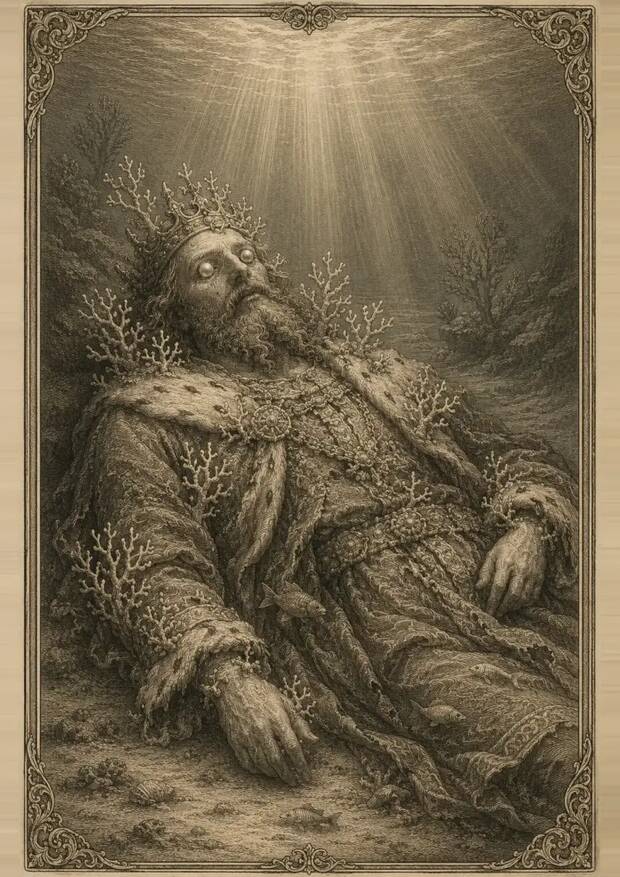
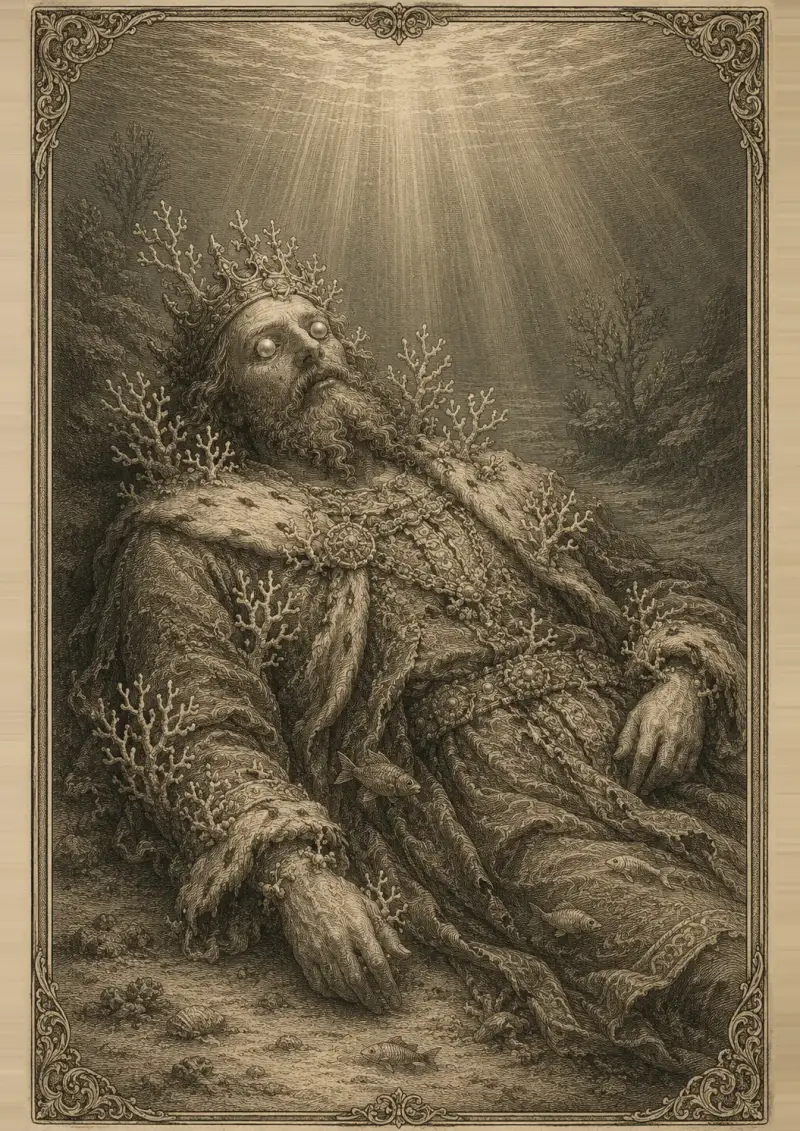
The Tempest: study questions and answers (PDF)
PDF, 17 pages, 927 KB. Free, no sign-up, made to be printed.
Use it with the The Tempest study guide and the quotation sheet (PDF).
How to use these questions
Read or watch the act first, then cover the answers and try the questions from memory. The comprehension questions check what happens and who does it. The analysis questions ask how and why, and their answers are models of the kind of paragraph an essay needs: a point, a short quotation, a named method and its effect. The essay questions at the end come with outline answers you can expand. For background, use the Tempest study guide, and keep the quotation sheet beside you.
Act 1
Comprehension
What happens in the opening scene?
A ship carrying Alonso, King of Naples, and his court is caught in a violent storm. The courtiers come on deck and hinder the crew, and the Boatswain orders them below, asking What cares these roarers for the name of king?
The scene ends with cries of We split, we split!
and the ship apparently lost.
How did Prospero lose his dukedom?
Twelve years earlier Prospero, Duke of Milan, left the government to his brother Antonio so that he could study. Antonio made a bargain with Alonso of Naples, promising tribute and homage in return for an army. One midnight Antonio opened the city gates, and Prospero and Miranda, who was not yet three, were put to sea in a rotten boat. Gonzalo, who had to carry out the plan, gave them food, water, clothes and Prospero’s books.
Who is Ariel, and what does he ask Prospero for?
Ariel is a spirit. The witch Sycorax shut him in a cloven pine for refusing her commands, and he stayed there a dozen years, until Prospero arrived and released him. He now serves Prospero and has just carried out the storm. He asks for My liberty
, reminding Prospero of a promise to shorten his service by a year. Prospero threatens him, then promises to free him after two days.
What is Caliban’s claim to the island, and how does Prospero answer it?
Caliban says the island is his by inheritance from his mother, Sycorax, who was banished from Algiers to the island and gave birth to him there. He says Prospero was kind at first, that he showed Prospero the island’s resources, and that he is now penned in a rock. Prospero replies that he treated Caliban with humane care
and lodged him in his own cell until Caliban tried to rape Miranda. Caliban does not deny it.
How do Ferdinand and Miranda meet, and why does Prospero treat Ferdinand harshly?
Ariel’s music leads the grieving Ferdinand to Prospero and Miranda. Miranda takes him for a spirit, A thing divine
, and he takes her for a goddess. They fall in love at once, exactly as Prospero intends. He then accuses Ferdinand of being a spy, freezes him with a charm when he draws his sword, and makes him a prisoner. An aside gives the reason: lest too light winning / Make the prize light
.
Analysis
How does Shakespeare present Prospero as he tells his story in Act 1, Scene 2?
Shakespeare presents a man whose anger is still fresh and who needs to control how his story is heard. His sentences are long and tangled, broken by parentheses and by repeated demands for attention such as Dost thou attend me?
, although Miranda is listening closely. The broken syntax suggests a mind returning to an injury. He admits his share of the blame, The government I cast upon my brother
, but his imagery puts the guilt on Antonio, The ivy which had hid my princely trunk
, a parasite on a noble tree. Structurally, the betrayal is narrated and not staged, so the audience has only Prospero’s version.
How does Shakespeare shape the audience’s response to Caliban in his first scene?
The response is deliberately divided. Prospero introduces him with insults, poisonous slave
, yet Caliban answers in blank verse (unrhymed five-beat lines), the form of the noble characters. His account of the first days is tender and simple: Prospero strok’st me and made much of me
and taught him to name the bigger light
, and the plain statement And then I loved thee
makes the later confinement feel like a betrayal. Then Shakespeare complicates the sympathy. Caliban tried to rape Miranda and regrets only that he failed. The audience is left holding a real grievance and a real crime together, and the scene does not tell us how to weigh them. See the page on power and colonialism for more.
Compare Ariel’s and Caliban’s relationships with Prospero in Act 1.
Both are servants, and Prospero calls each my slave
, but they respond in opposite ways. Ariel enters with All hail, great master!
and a rush of verbs, ready to fly, / To swim, to dive into the fire
; his eagerness wins the praise My brave spirit
. Caliban enters cursing. Yet the contrast is less neat than it looks. When Ariel asks for freedom, Prospero calls him malignant thing
and threatens to imprison him in an oak, which repeats what Sycorax did. The real difference is the bargain. Ariel’s service has a promised end, so obedience is worth his while. Caliban has been promised nothing, so he has only curses.
Act 2
Comprehension
Why were Alonso and his court at sea, and what does Alonso believe about Ferdinand?
They were sailing home from Tunis, where Alonso’s daughter Claribel had married the King. Alonso believes Ferdinand has drowned. Francisco says he saw the prince swimming strongly for the shore, but Alonso will not be comforted: No, no, he’s gone
. Sebastian makes it worse by blaming Alonso for marrying Claribel so far from home.
What kind of society does Gonzalo say he would create on the island?
A commonwealth with no trade, no magistrates, no writing, no rich or poor, no servants, no inheritance, no land boundaries, no farming, no weapons and no work. Nature would supply everything, and there would be No sovereignty
. Sebastian and Antonio point out the contradiction: Gonzalo began by imagining himself king of it.
What do Antonio and Sebastian plan to do, and what prevents them?
Ariel’s music sends everyone to sleep except these two. Antonio persuades Sebastian that, with Ferdinand drowned and Claribel far away in Tunis, he can be King of Naples if Alonso dies. Antonio will stab Alonso and Sebastian will kill Gonzalo. They draw their swords, but Ariel sings a warning in Gonzalo’s ear and he wakes. The two claim they heard a roaring Like bulls, or rather lions
.
How do Trinculo and Stephano come to meet Caliban?
Caliban sees Trinculo, Alonso’s jester, takes him for one of Prospero’s spirits and lies flat under his cloak. Trinculo, afraid of another storm, crawls under the cloak too: Misery acquaints a man with strange bedfellows
. Stephano, the King’s butler, arrives drunk, having floated ashore on a barrel of wine. He finds what looks like a monster with four legs and two voices, and pours wine into it.
What does Caliban promise Stephano at the end of Act 2?
Believing that Stephano is a god who has dropped from heaven with celestial liquor
, Caliban swears to be his subject and to kiss his foot. He promises to show him the island’s springs, berries and nuts, and to carry no more wood for Prospero. He leaves singing Freedom, high-day!
Analysis
How does Antonio persuade Sebastian to attempt murder?
Antonio persuades by hints, so that Sebastian reaches the idea himself. He begins with a sentence he breaks off, What might, / Worthy Sebastian, O, what might
, a device called aposiopesis (stopping short and leaving the rest unsaid), which invites Sebastian to finish the thought. He turns the sleepers into a metaphor, Thou let’st thy fortune sleep
, and uses hyperbole (deliberate exaggeration) to remove the lawful heir: Claribel lives Ten leagues beyond man’s life
. A theatrical image makes the crime sound destined: what’s past is prologue
. Finally he offers himself as proof that usurpation pays and that conscience can be ignored. Compare ambition in Macbeth.
What is the significance of Gonzalo’s speech about his ideal commonwealth?
The speech makes the island a test of whoever looks at it. Gonzalo sees grass that is lush and lusty
; Antonio sees ground that is tawny
. Given an apparently empty land, the kind old councillor imagines innocence and plenty, drawing on an essay by Montaigne about the peoples of the New World. Shakespeare neither endorses nor dismisses him. The vision contradicts itself, since a state with no ruler is being designed by its would-be king, and the mockers score the point. But the mockers are the men who go on to plot a murder, so cynicism is not presented as wisdom. The speech also comments silently on Prospero, who actually rules this island, with servants and punishments.
How does Shakespeare use comedy in Act 2, Scene 2 to explore serious ideas?
The scene is a parody (a comic imitation) of the main plot. Stephano’s bottle becomes a sacred object: he makes the others swear on it and tells them to kiss the book
, which mocks oaths taken on the Bible and echoes the books behind Prospero’s power. Caliban’s worship of a drunkard replays, in a foolish key, his first welcome of Prospero. Form carries meaning too. The clowns speak prose, while Caliban’s promises are in verse, so the so-called monster sounds the most dignified. His song celebrates freedom yet announces that he Has a new master
: he has changed rulers, not escaped rule.
Act 3
Comprehension
What task has Prospero set Ferdinand, and how does Ferdinand respond?
Ferdinand must carry and stack Some thousands of these logs
, the kind of work Caliban does. A prince would normally find it degrading, but he bears it willingly because he is working for Miranda, the thought of whom makes my labors pleasures
.
What do Ferdinand and Miranda agree in Act 3, Scene 1, and who is watching?
Miranda tells Ferdinand her name, against her father’s command, and offers to carry the logs for him. She asks directly, Do you love me?
, and then proposes: I am your wife if you will marry me
. He accepts and they join hands. Prospero watches unseen and approves: Heavens rain grace / On that which breeds between ’em
.
What is Caliban’s plan against Prospero?
Caliban will lead Stephano to Prospero during his afternoon sleep, where Stephano can knock a nail into his head
. The books must be seized first, because Prospero has no power without them. Stephano will then be king with Miranda as his queen, and Trinculo and Caliban will be viceroys. The invisible Ariel hears everything, starts a quarrel by calling out Thou liest
in Trinculo’s voice, and leads them off with music.
What happens at the banquet in Act 3, Scene 3?
Strange shapes bring in a banquet for the exhausted courtiers. As Alonso, Sebastian and Antonio go to eat, there is thunder, Ariel appears as a harpy and the food vanishes. He calls them three men of sin
, reminds them that they drove out Prospero and his child, tells Alonso that the loss of his son is the punishment, and says that only heart’s sorrow / And a clear life ensuing
can save them.
How do the three guilty men react to Ariel’s speech?
Alonso is overwhelmed. He believes the waves, the wind and the thunder named Prospero, concludes that Ferdinand died for his father’s crime, and goes to drown himself: I’ll seek him deeper than e’er plummet sounded
. Sebastian and Antonio show no remorse and run off to fight the spirits. Gonzalo says All three of them are desperate
and sends the others after them.
Analysis
How does Shakespeare present the love between Ferdinand and Miranda in Act 3, Scene 1?
Shakespeare presents it through the play’s language of service, turned to a new purpose. Ferdinand describes love as willing bondage: at first sight his heart did fly to your service
, and he takes Miranda’s hand with a heart as willing / As bondage e’er of freedom
. The paradox matters in a play full of unwilling servants, because it shows service that is chosen. The lovers’ styles differ. Ferdinand speaks courtly praise, So perfect and so peerless
, while Miranda uses plain monosyllables: I am your wife if you will marry me
. Her directness makes her the bolder of the two. Yet Prospero watches throughout and calls her Poor worm
, so the audience knows the freest moment in the play has been arranged.
Why does Shakespeare give Caliban the speech beginning “Be not afeard” in the middle of the murder plot?
The placing forces two views of Caliban together. He has just described, with relish, how to batter Prospero’s skull. Now he reassures two frightened men that the island’s sounds give delight and hurt not
, in verse far more musical than anything they say. The speech moves through layers of sleep and waking until he recalls dreaming of riches and waking to find them gone: I cried to dream again
. The childlike verb gives him a longing nobody else on the island expresses. Stephano’s reply is about money: he will have my music for nothing
. The contrast makes the “monster” the only one of the three capable of wonder, which unsettles Prospero’s verdict on him. The page on magic and illusion analyses these lines.
How does Ariel’s harpy speech work on its hearers and on the audience?
For its hearers the speech is the voice of heaven. Ariel speaks of Destiny
and of powers delaying, not forgetting
, and his imagery is designed to disgust: the sea has been made to belch up you
, as if the men were something it could not stomach. The audience hears it differently, because Prospero is standing above, and afterwards he praises the performance: Bravely the figure of this Harpy hast thou / Performed
. We know the divine judgement is one man’s script. That double view is the point. The show is a piece of theatre aimed at the conscience, and it works only where a conscience exists. Alonso breaks; Antonio and Sebastian reach for their swords.
Act 4
Comprehension
What does Prospero give Ferdinand at the start of Act 4, and what warning comes with it?
He gives him Miranda in marriage, calling her a third of mine own life
, and explains that the hardships were trials of Ferdinand’s love. He warns him not to sleep with her before the wedding ceremony. If he does, the marriage will be cursed with barren hate, / Sour-eyed disdain, and discord
.
What is the masque, and who appears in it?
It is an entertainment performed by Prospero’s spirits to celebrate the betrothal. Iris, goddess of the rainbow and messenger of the gods, summons Ceres, goddess of the harvest. Juno, queen of the gods, descends, and together they bless the couple with honour, children and plenty. Venus and Cupid are kept away. Nymphs and reapers then begin a dance.
Why does Prospero end the masque?
During the dance he suddenly remembers that foul conspiracy / Of the beast Caliban
and that the hour of the attack is near. He dismisses the spirits, who vanish with a confused noise. Miranda says she has never seen him so angry. He reassures Ferdinand with the speech beginning Our revels now are ended
, then admits Sir, I am vexed
and walks apart to calm himself.
How are Caliban, Stephano and Trinculo defeated?
Ariel has already led them by music through thorns and into a filthy-mantled pool
. Prospero now has Ariel hang showy clothes outside the cell. Stephano and Trinculo stop to try them on, although Caliban protests: Let it alone, thou fool. It is but trash
. Spirits in the shape of hounds then chase all three away, and Prospero orders cramps and pinches for them.
Analysis
What does the masque reveal about Prospero’s hopes and anxieties?
The masque is Prospero’s picture of a perfect future, and its form shows how tightly he wants that future controlled. The goddesses speak in rhymed couplets, stiffer than the play’s usual verse, and they promise a world without hardship: Spring come to you at the farthest / In the very end of harvest
, which means a year with no winter in it. Venus and Cupid are excluded, so desire is shut out of a celebration of marriage. That matches Prospero’s repeated warnings to Ferdinand about chastity. Ferdinand is enchanted and says Let me live here ever
. The vision cannot hold. A plot Prospero had forgotten breaks it, which suggests that an ideal this orderly leaves out too much of the real world.
Why is Prospero so disturbed when he remembers Caliban’s plot?
This is an open question, because the danger itself is small: three drunkards whom Ariel has already led into a pond. There are two strong readings. The first is that Prospero is shaken by his own lapse. In Milan he lost a dukedom by being absorbed in study, and now, absorbed in his own show, he has again forgotten a threat to his life. The second is that Caliban represents a failure he cannot bear, the pupil on whom his pains
were all, all lost, quite lost
. Either way, his calm speech about the vanishing world ends in confession: My old brain is troubled
.
How does Shakespeare contrast Caliban with Stephano and Trinculo in Act 4?
Shakespeare makes the “savage” the most clear-sighted of the three. Caliban keeps to the purpose and sees through the bait at once: the clothes are but trash
. The two Europeans are captivated by the costume of rank. Trinculo cries O King Stephano!
and they quarrel over a gown, a comic version of Antonio’s boast in Act 2 about how well his stolen robes fit. The contrast undermines Prospero’s claim that nurture cannot stick
on Caliban. But Shakespeare does not idealise him. In the same scene he offers to be Stephano’s foot-licker
, so his intelligence serves a new servitude.
Act 5
Comprehension
What changes Prospero’s mind about revenge?
Ariel reports that the courtiers are held by the charm: the three guilty men are out of their minds and the rest mourn over them, Gonzalo in tears. He adds that Prospero would pity them if he saw them, and that he himself would, were I human
. Prospero answers And mine shall
, declares that The rarer action is / In virtue than in vengeance
, and orders their release.
What does Prospero promise to do with his magic?
After one last charm of heavenly music
to restore the courtiers’ senses, he will give it up completely. He calls it rough magic
and says: I’ll break my staff
, bury it deep in the earth, and I’ll drown my book
.
How does Prospero deal with Alonso, Sebastian and Antonio?
He appears dressed as Duke of Milan and embraces Alonso, who at once gives up the dukedom and asks pardon. Privately he tells Sebastian and Antonio that he knows of their plot against the King but will tell no tales
for now. He forgives Antonio, calling him most wicked sir
, and demands the dukedom back. Antonio does not reply.
What “wonder” does Prospero show Alonso?
He reveals Ferdinand and Miranda playing chess. Alonso, who believed his son drowned, is reunited with him and accepts Miranda as a daughter. Miranda, seeing so many people for the first time, exclaims O, brave new world
. Gonzalo sums up the voyage as one in which everyone found something, including themselves.
What happens to Ariel, Caliban and Prospero at the end?
Ariel has one last task, to give the ships calm seas and good winds, and is then set free to the elements
. Caliban is sent to tidy the cell if he hopes for pardon, and says he will seek for grace
. Prospero will sail to Naples for the wedding and then go home to Milan, where Every third thought shall be my grave
. In the Epilogue he asks the audience to release him with applause.
Analysis
How does Shakespeare present Prospero’s farewell to his magic?
Shakespeare makes the farewell a celebration and a judgement at once. The speech opens gently, addressing elves who chase the tide with printless foot
, then swells into a list of violent feats: Prospero has rifted Jove’s stout oak
and opened graves. The single long sentence lets the power build before a turn in mid-line, But this rough magic / I here abjure
. The adjective rough
condemns what the list has just glorified, and abjure
is a formal word for renouncing on oath. Shakespeare adapted the speech from the sorceress Medea in Ovid, which hints that this art was closer to witchcraft than Prospero liked to admit. The final promise is plain and monosyllabic: I’ll drown my book
.
How convincing is Prospero’s forgiveness of Antonio?
It is convincing as a decision and unconvincing as a reconciliation. The words are unmistakable, I do forgive / Thy rankest fault
, but they sit inside a sentence of open disgust: to call Antonio brother Would even infect my mouth
. The imagery of disease shows that the feeling has not changed. The pardon also runs straight on to a demand, and require / My dukedom of thee
, so mercy and power arrive together. Antonio says nothing, and Shakespeare gives him no line of repentance anywhere in the scene. One reading is that this exposes the pardon as hollow. A better one is that it shows forgiveness honestly: Prospero gives up revenge without pretending to love, and no magic can make his brother sorry. The page on forgiveness develops this.
What is the effect of Miranda’s “brave new world” and Prospero’s reply?
The exchange sets innocence beside experience and refuses to choose between them. Miranda’s lines are a run of exclamations, How beauteous mankind is!
, and brave
here means splendid. There is dramatic irony (the audience knows more than the speaker), because the people she admires include Antonio and Sebastian, who planned to murder their king that same afternoon. Prospero’s answer, ’Tis new to thee
, is four dry monosyllables that complete her verse line and deflate it. Yet he does not correct her, and the play does not say she is wrong: her generation, through the marriage, is the hope of the ending.
Whole-text questions
Is Prospero a just ruler or a tyrant?
The play supports both answers, and a good response keeps both in play. He is a wronged man who harms nobody permanently: the wreck leaves Not a hair perished
, and with every enemy at his mercy he chooses pardon. He is also a master who rules by threat. He promises Caliban cramps, threatens to shut Ariel in an oak, and silences his daughter with My foot my tutor?
Caliban calls him a tyrant
, and the play lets the charge stand unanswered. The fairest judgement follows his development. He begins as a man who must control everything, and he ends by giving up the means of control: his servant, his book, and in the Epilogue his authority over the stage. What makes him just is not how he uses power but that he lets it go.
How does Caliban change over the course of the play?
Caliban moves from cursing, through a false liberation, to a kind of self-knowledge. In Act 1 he is a rebel with a grievance and no means: I must obey
. In Act 2 he mistakes a drunken butler for a god and trades one master for another. In Acts 3 and 4 he leads a murder plot with more sense than his partners, and also speaks the play’s most lyrical lines about the island. In Act 5 he judges himself: What a thrice-double ass / Was I to take this drunkard for a god
. He promises to seek for grace
. Whether this is moral growth or fear of punishment is left open, since he also expects to be pinched to death
. What is certain is that he is the only conspirator in either plot who says he was wrong.
How does the play explore freedom and service?
Nearly every character is bound to someone, and Shakespeare compares the ways they bear it. Ariel serves well in return for a promised release and keeps asking when it will come. Caliban serves under compulsion and dreams of freedom, but can imagine it only as a new master. Ferdinand turns forced labour into devotion, taking Miranda’s hand as willingly As bondage e’er of freedom
. The pattern suggests that service freely chosen is no slavery, while freedom without judgement, like Caliban’s with Stephano, is no freedom. The last surprise is Prospero. In the Epilogue the master of the island begs the audience: Let your indulgence set me free
. By ending there, the play makes dependence on others a general human condition and not just the lot of servants.
Why does Shakespeare confine the action to one island and a few hours?
The tight frame turns the play into an experiment under pressure. Shakespeare usually ranges across years and countries, but here the characters keep checking the clock: the work must be done ’twixt six and now
, and in Act 5 Ariel announces the sixth hour
. The limit gives Prospero’s plan urgency, since his fortunes depend on a moment that will not return. It also means the past must be told, not shown, so the long narration of Act 1 gives us the old crime only in Prospero’s words. Within the single place, three plots run side by side: the court party, the lovers and the clowns. Each is a contest over who shall be master, so the structure itself invites comparison, and the comic conspiracy becomes a mirror of the serious ones.
How far is The Tempest a play about colonialism?
It is partly that, and the evidence should be weighed on both sides. In support: Shakespeare knew reports of the Sea Venture’s wreck on Bermuda in 1609, and Ariel mentions the still-vexed Bermoothes
. Caliban’s history follows the shape of a colonial encounter, from welcome to dispossession, and he states it as a legal claim: This island’s mine
. Trinculo’s remark about paying to see a dead Indian
brings the New World directly into the play. Against: the island lies between Tunis and Naples, Sycorax was also an incomer, and the story is a romance of dukes, magic and marriage. The most accurate answer is that Shakespeare uses the colonial moment to ask a wider question about what gives anyone the right to rule another person. Many modern critics, especially postcolonial ones, have made Caliban the centre of the play.
How does Shakespeare use verse, prose and song to shape our responses?
The choice of form is a guide to how we should hear each speaker. Blank verse is the medium of authority and serious feeling, and prose belongs to the Boatswain and the clowns. The significant exception is Caliban, who speaks verse even to Stephano and Trinculo, so the form argues against the label “monster”. Song marks the presence of magic. Ariel’s short rhymed lines, such as Full fathom five thy father lies
, sound unlike anything around them and lead characters where Prospero wants them. The masque’s stiff couplets signal an artificial ideal. Finally, the Epilogue reduces Prospero to plain four-beat couplets: Now my charms are all o’erthrown
. The grand verse has gone with the magic, and the smaller form makes him sound like an ordinary man asking a favour.
Essay questions with outline answers
“Prospero is the victim of the play’s story but the tyrant of its stage.” How far do you agree?
Thesis: The statement is true of the first four acts, but the ending shows a man who learns to distrust his own control and gives it up.
- Point 1: He is a real victim, and partly a careless one. In Act 1, Scene 2 he admits he was
rapt in secret studies
while Antonio took over, so his later need for control answers an earlier neglect. - Point 2: On the island he governs by threat and surveillance. He promises Caliban he will
rack thee with old cramps
, threatens Ariel with an oak, and watches his daughter’s courtship unseen. - Point 3: He stage-manages other people’s feelings, from the storm to the harpy. His aside in Act 1,
It works
, is the voice of a director. - Counter-argument: Act 5 reverses the pattern. Prompted by Ariel he resolves
And mine shall
, renounces hisrough magic
and frees his servant, and the Epilogue leaves him dependent on the audience.
Conclusion: Prospero is a tyrant who chooses to stop being one, and the play values the choice more because the tyranny was real.
How does Shakespeare present the relationship between Prospero and Ariel?
Thesis: Shakespeare presents a bond of real affection built on an unequal bargain, in which the servant ends by teaching the master.
- Point 1: The relationship begins as debt and threat. In Act 1, Scene 2 Ariel asks for
My liberty
and is calledmalignant thing
; Prospero controls him by retelling,Once in a month
, what he owes. - Point 2: Ariel is the instrument of all the magic, and takes a performer’s pride in it. His report that he
flamed amazement
shows delight in the work, and Prospero’s praise is constant. - Point 3: Affection grows on both sides. Ariel asks
Do you love me, master? No?
and is answeredDearly, my delicate Ariel
. In Act 5 Prospero admitsI shall miss / Thee
. - Counter-argument: Ariel never stops asking for release, and his joy is in leaving. His last song imagines life
Under the blossom
, without a master. It is also Ariel, in Act 5, who prompts the mercy:Mine would, sir, were I human
.
Conclusion: The relationship shows power at its most attractive and still insists that the best thing a master can do for a servant is to let him go.
“Ferdinand and Miranda’s love is the one thing on the island that Prospero does not control.” How far do you agree?
Thesis: Prospero arranges the meeting and tests the match, but the feeling itself, and Miranda’s boldness in declaring it, lie outside his command.
- Point 1: The meeting is engineered. Ariel’s music draws Ferdinand to the cell, and Prospero’s asides in Act 1, Scene 2 track his success:
It goes on, I see, / As my soul prompts it
. - Point 2: He controls its pace, inventing obstacles
lest too light winning / Make the prize light
, and he spies on the proposal in Act 3, Scene 1. - Point 3: Yet Miranda acts for herself. She defends Ferdinand against her father, breaks his order by telling her name,
I have broke your hest
, and proposes in her own plain words:I am your wife if you will marry me
. - Counter-argument: Her freedom is limited by her experience. Ferdinand is
the third man that e’er I saw
, and the marriage serves Prospero’s political aim of joining Milan to Naples.
Conclusion: Prospero can stage the circumstances of love but not the love itself, which is why, watching the proposal, he can only pray: Heavens rain grace
.
“The comic plot of Stephano, Trinculo and Caliban is more than light relief.” Discuss.
Thesis: The comic plot is a parody of the serious ones, and its job is to show what the nobles’ ambitions look like without their fine language.
- Point 1: It mirrors the usurpations. Stephano’s
Monster, I will kill this man
in Act 3, Scene 2 repeats, in a drunken key, Antonio’s plan to kill Alonso and his earlier theft of Milan. - Point 2: It replays the colonial encounter. In Act 2, Scene 2 Caliban offers a newcomer the island’s riches and receives liquor and servitude, which casts a hard light on Prospero’s own arrival.
- Point 3: It tests the play’s ideas about nature and nurture. In Act 4 the Europeans are fooled by fine clothes while Caliban calls them
but trash
. - Counter-argument: The scenes are also simply funny, with slapstick under the cloak and Ariel’s ventriloquism, and the plot is never a real danger. Trinculo himself jokes that
the state totters
.
Conclusion: The laughter is the method: by making rebellion ridiculous in the clowns, Shakespeare invites us to see how little separates it from the crimes of dukes.
“Civilisation is no guarantee of goodness in The Tempest.” Discuss.
Thesis: The play repeatedly sets educated wickedness beside untaught feeling, and so refuses Prospero’s confident division between nature and nurture.
- Point 1: The most polished men are the worst. Antonio, a duke, jokes that he does not feel conscience,
This deity in my bosom
, in Act 2, Scene 1, and Miranda has already observed thatGood wombs have borne bad sons
. - Point 2: The “savage” has what they lack. Caliban hears the island’s
Sounds and sweet airs
in Act 3, Scene 2, and in Act 5 he alone admits his error. - Point 3: Nurture does work on some. Miranda, taught by her father, is defined by compassion:
O, I have suffered / With those that I saw suffer!
Education is powerful but not sufficient. - Counter-argument: The play does not romanticise nature. Caliban attempted rape and plans a brutal murder, and Gonzalo’s dream of a natural commonwealth is mocked. Prospero’s judgement,
a born devil
, is harsh but not baseless.
Conclusion: Goodness in the play comes from choice, not from birth or schooling, which is why the climax is one man’s decision to prefer virtue
to vengeance
.

A page of Shakespeare, every day.
This resource comes from Daily Bard, an app for iPhone and iPad. Each morning it shows one engraved plate and one passage, exactly as Shakespeare wrote it, with a plain-English reading on the back of the leaf.
Free to download. The Full Edition is a one-time US$11.99: no subscription, no account, no ads, no tracking.
Get it on the App Store: apps.apple.com/app/id6792967225
More free study guides, lesson plans and close readings: dailybard.app